
Our Mission
To be a vibrant smart city of service excellence by 2030.
Discover Marondera's history, roots, strategic position, community values and vision for a vibrant smart city by 2030.
An overview of the city's development, character and strategic role.
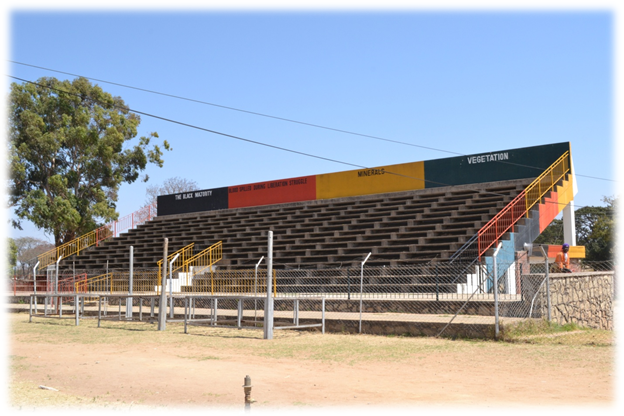
The first Village Management Board was established in 1913 and the Town Management Board in 1943. Subsequently in 1968 Marondera became a Town Council and in 1974 was conferred Municipality status. Marondera became the provincial capital for Mashonaland East in 1984. The town is now the centre for a large and progressive farming community around which some industries have been established. It is the nodal centre of administration for the whole province as well as servicing the several rural growth points surrounding it.
The town of Marondera, named after a Sub Chief of the Varozvi clan living at the Nyameni Hill was established in 1890 as a “Way Station” for people travelling from Harare to Mutare (then Salisbury to Umtali). It had been anticipated that the railway line, working its way up from Beira would pass through the settlement on its way to Harare; but when in 1898 the rail authorities discovered that 40 bridges and culverts would be required in the 67km between Headlands and Marondera alone by that route, they bypassed Marondera and established the line along the crest of the watershed some 9km to the North. The police and “Native Commissioner’s office” moved to the line of the rail and by 1900 the site of the first settlement was abandoned. The new town began to grow around the railway station and a hotel was established about that time.
To be a vibrant smart city of service excellence by 2030.

To deliver sustainable socio-economic services to the community.

Marondera experienced rapid population growth since independence since it grew by more than 300% during the years 1982 to 2012. Attendant to this population growth is the need for huge investment in infrastructure such as water, sewer, roads, health care and education facilities which require substantial capital outlay. The land under the Municipality’s jurisdiction spans some 43.5 km2 and there are 319 people in council’s employ. Council’s annual revenue budget is about $6.4 million and capital budget of $27.3 million. The Population Census for the years 1982, 1992, 2002 and 2012 and the attendant percentage increases are shown below.
Marondera's geographical profile, community responsibility and key milestones.
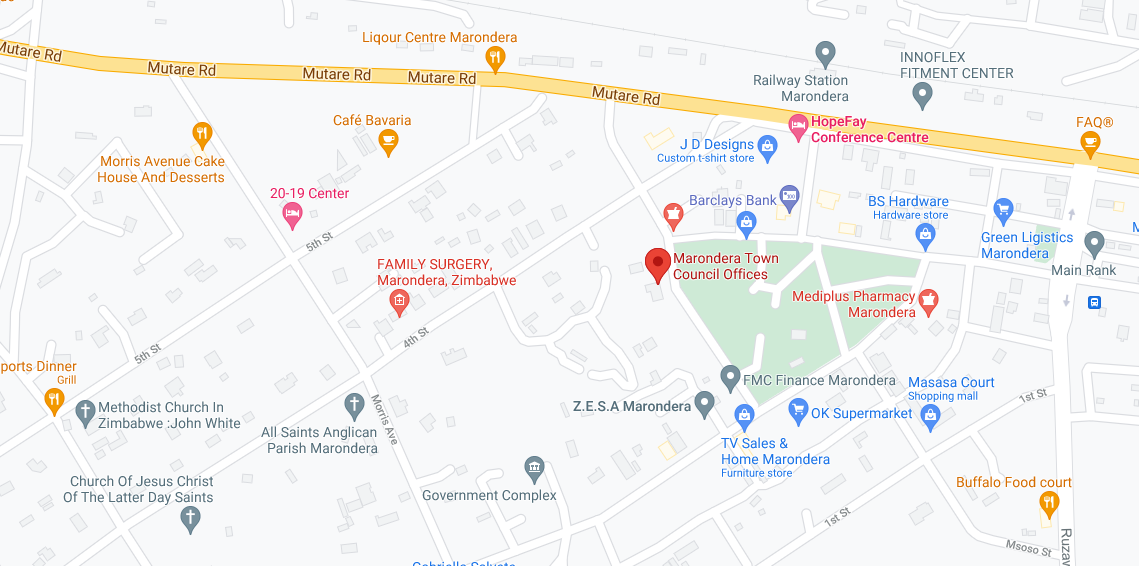
Marondera is located 74km from the capital city of Harare on the national road and railway line to Mutare. The Mozambique Party city of Beira is only 380km away. The Harare International airport is 45 minutes' drive away and there is a local aerodrome. Marondera's strategic geographical position contributes to its being a potential center as an export processing zone.
Let us maintain our town and grow together.
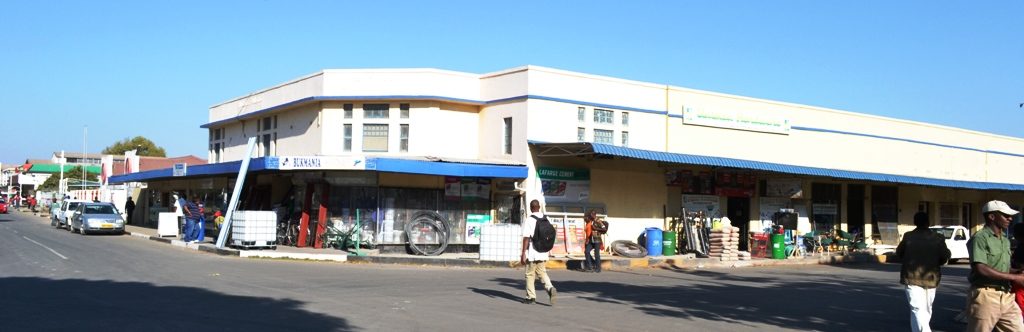
Key milestones in the development of the Municipality.
The town of Marondera, named after a Sub Chief of the Varozvi clan living at the Nyameni Hill, was established in 1890.
The first Village Management Board was established and the Town Management Board in 1943.
Subsequently Marondera became a Town Council and in 1974 was conferred Municipality status.
Marondera became the provincial capital. The town is now the centre for a large and progressive farming community around which some industries have been established. It is the nodal centre of administration for the whole province as well as servicing the several rural growth points surrounding it.
Find answers to common questions about payments, residential stands and contacting the Municipality of Marondera.
Please kindly note only applications on the waiting list will be considered in stand allocation.
Residential Stand Waiting List Application Form (Click Here)
The fees for waiting lists:
You can visit our office or pay using ecocash and we will share a receipt after transaction completes.
You could send someone money on any money transfer service. We are now accepting foreign currency payments at RBZ daily bank rate.
(Compulsory)
- Certified ID copy,
- Current Payslip / Bank statement for the last 3 months
- Receipt Number (after payment)
(Optional)
Spouse ID, Payslip / Bank statement for the last 3 months (if any).